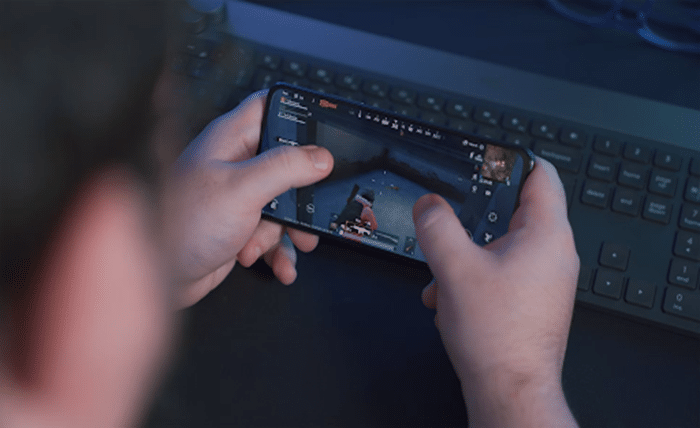
A football match reaches its most tense moment. The striker approaches the penalty spot, the crowd falls quiet, and the mobile stream suddenly freezes. By the time the picture returns, the score has already changed. Online gaming has its own version of this frustration: a racing car turns too late, or a goalkeeper reacts after the ball is already in the net. Both problems often begin with delay.
That delay matters across a growing range of mobile activities. A cricket fan may watch a live match, join a multiplayer game and read about bitcoin cricket betting during the same afternoon. None of these services works well when information arrives slowly. 5G promises faster downloads, but its more interesting contribution is the ability to move data with less waiting between a device and a network.
The Important Number Is Not Always Download Speed
Mobile networks are usually promoted through impressive speed figures. A large number looks good in an advertisement, although raw download speed tells only part of the story. Gaming depends heavily on latency, which measures how long a command takes to reach a server and return.
Imagine a football game on a phone. A pass button is pressed, the instruction travels across the network, and the server records the action. Even a brief delay can make the move feel clumsy. In a casual puzzle game, such a pause may go unnoticed. During an online racing event or competitive shooter, the same pause can decide the result.
5G can shorten this journey when coverage and network conditions are suitable. Controls feel more immediate, voice chat becomes easier to follow, and quick movements are less likely to appear out of sequence.
Five Changes a Strong 5G Connection Can Bring
- Large game updates can download without consuming an entire evening.
- Online controls can respond more quickly during competitive matches.
- Live broadcasts can maintain a sharper picture while movement remains fast.
- Voice communication can sound more natural during group play.
- Busy public locations can support more active devices at once.
The final point is easy to overlook. A network may perform perfectly at home but struggle inside a full stadium or crowded railway station. Capacity becomes just as important as speed when thousands of screens request information together.
A Live Match Cannot Wait Patiently in a Buffer
Streaming a recorded film is relatively forgiving. The application can load several minutes before playback reaches that part of the video. Live sport has no such luxury. Too much buffering creates a delay behind the actual event, while too little buffering makes the picture vulnerable to every brief interruption.
A better mobile connection allows a streaming service to find a more useful balance. Video can remain close to the live action without falling apart whenever the signal changes slightly. This matters when score alerts and group messages can reveal a goal before the broadcast shows it.
Extra bandwidth also creates room for choice. A motorsport viewer may switch between an onboard camera and the main coverage. A cricket platform can offer a standard broadcast alongside detailed scorecards. Football coverage may include a tactical view that shows movement across the whole pitch.
Cloud Gaming Gets a Fairer Chance
A demanding video game normally needs powerful hardware. Cloud gaming moves most of that work to a remote data centre. The phone receives a video stream of the game, while every tap and controller movement travels back to the server.
The arrangement sounds simple until the connection becomes unstable. Unlike a film, a game cannot prepare the next scene in advance because the next action has not happened yet. A delayed command makes the entire experience feel disconnected.
5G gives cloud gaming a better chance outside the home. A recent phone can run visually complex titles without storing enormous files or containing a premium graphics chip. Strong coverage is still essential, and a distant server can add delay even when the local signal looks excellent.
Stadium Technology Moves Beyond the Scoreboard
A packed venue places unusual pressure on mobile infrastructure. Spectators upload photographs, check statistics, send messages and replay controversial moments almost simultaneously. Older networks can become painfully slow under that weight.
With suitable 5G equipment, a stadium can offer more than basic internet access. Digital maps may guide visitors toward seats. Food orders can be placed without missing part of the match. Augmented reality could add player names or live statistics to a camera view.
What Can Still Spoil the Experience
- Patchy local coverage may interrupt a stream between neighbouring streets.
- Limited data allowances can make high-resolution video expensive.
- An overloaded platform can remain slow on an excellent network.
- Continuous streaming can drain a phone battery surprisingly quickly.
- Older devices may connect to 5G without supporting its best performance.
The small 5G icon at the top of a screen is not a magic seal of quality. Servers, applications, phone hardware and local infrastructure all influence the final result.
Better Connections Should Feel Almost Invisible
Most audiences are not interested in thinking about networks during a match or game. The technology succeeds when the picture stays clear, the controls respond and the conversation continues without awkward gaps.
5G will not eliminate buffering everywhere, nor will it make every mobile game flawless. Its real value is quieter than that. Faster and more responsive connections give developers fewer technical compromises to manage. For a viewer waiting on a penalty or a gamer entering the final lap, that quiet reliability may be the feature that matters most.